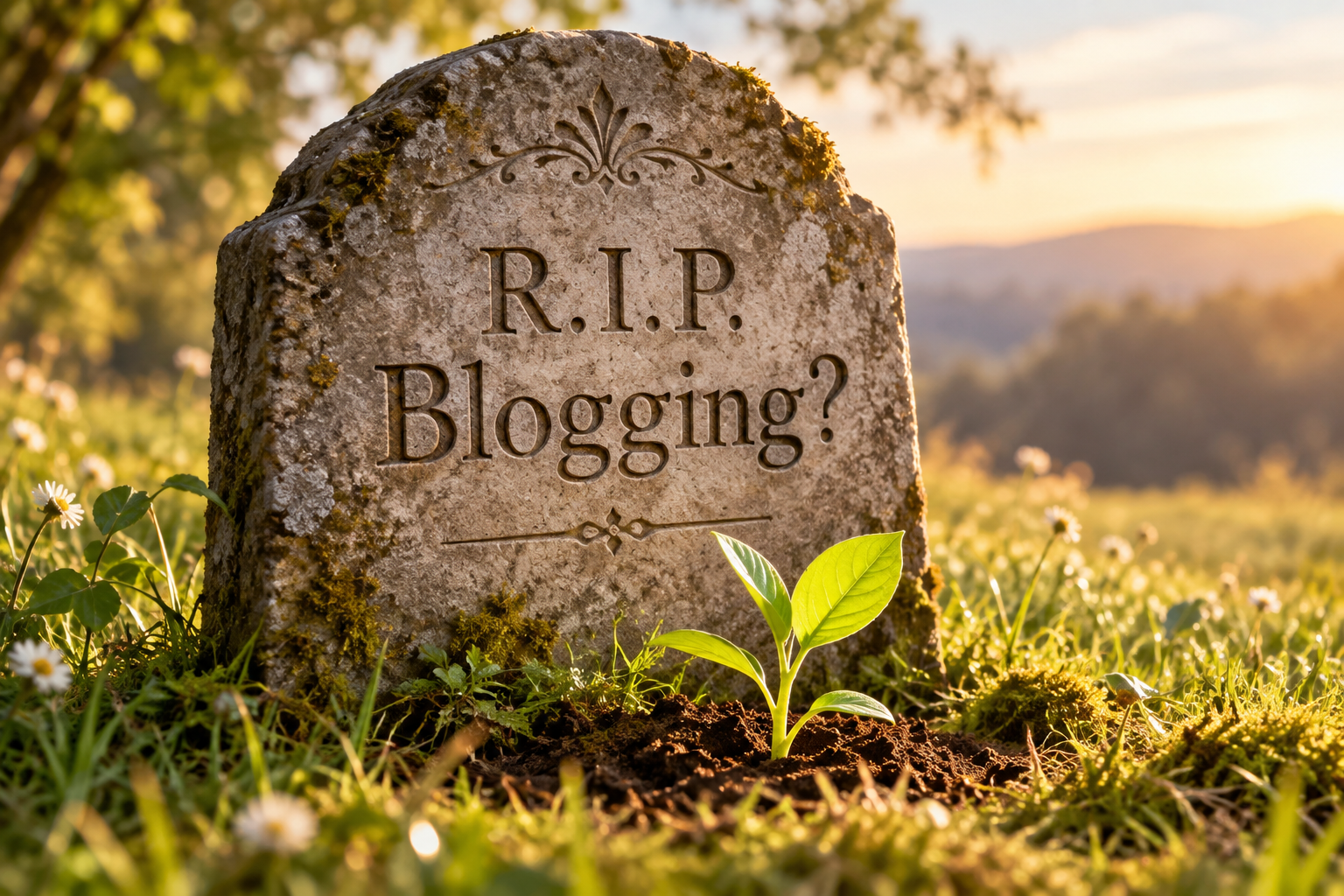
Is Blogging Dead in 2026? (Why Your Roots Matter More Than Your Branches)
Blogging isn’t dead… but the reason most people blog is. And the difference between those two things has a lot to teach us about trading.
This morning, Brett Steenbarger shared a list of the 80 best trading blogs to follow in 2026. Which made me pause.
In a year when AI answers almost every question before you finish typing it, why would one of the most respected voices in trading psychology still be pointing people toward… written blogs?
So I sat with the question the way I’d sit with a client’s question. Is blogging dead? Here’s the honest case on both sides.
The case that blogging is dead
AI search has swallowed the middle of the journey. Someone types “how do I stop revenge trading?” and gets a tidy answer on the spot – no click, no visit, no blog. The old formula of writing a post, ranking on Google, and watching readers arrive has thinned out dramatically.
Attention has moved, too. The trader who once read a 1,500-word post now watches a 60-second clip between sessions. And the platforms reward that behavior with far more reach than a blog will ever get on its own.
Then there’s the flood. The internet is now full of AI-written articles, all competing for the same tired eyes. A blog without distribution is like a beautiful lighthouse built three miles inland… the light works perfectly, but no ships ever pass.
The case that blogging is very much alive
Depth has become rare – and rare things gain value. In a sea of 30-second clips, a thoughtful long-form piece tells a reader “a real human who has walked this path wrote this.” That’s exactly why curated lists of trading blogs still exist, and still get shared.
A blog is land you own. Social platforms are rented apartments – the landlord can change the rules overnight, throttle your reach, or shut the building down. Your own website is the home you built with your own hands, and nobody can evict you from it.
And the people who open doors still read. Podcast hosts, conference organizers, and fellow coaches tend to vet someone by what they’ve written. Even the AI tools that “killed” blogging learn from, summarize, and cite well-written blogs… so thoughtful writing still shapes what people come to understand.
Roots and branches (and what this has to do with your trading)
Here’s where I landed. Blogging hasn’t died – it changed roles. It used to be the front door. Now it’s the root system of the tree.
But nobody stops to admire roots. We admire the branches – the leaves, the blossoms, the fruit. But every branch you see only flourishes because something unseen goes deep into the ground.
And this is exactly the pattern I see in traders. We chase the branches: the new indicator, the hot setup, the 60-second clip promising the secret. Meanwhile the roots – the nervous system, the old wounds, the part of us that clicks “buy” when we’re Hungry, Angry, Lonely, Tired, or Sad – go untended.
Then we wonder why the tree keeps falling over in a storm. It was never discipline. It was dopamine… and the roots underneath it.
The gap between knowing your rules and following them is never a discipline problem. It’s a nervous system problem. And nervous systems heal.
Tend your roots
If you’ve been trimming branches for years – new strategies, new rules, new resolutions -and the same patterns keep growing back, it might be time to look underground.
That’s the work we do at The Healing Trade. A few places to start:
- Start free: grab the Free Trading Plan and build a plan that works with your nervous system, not against it.
- Go deeper: The Healing Trade course and companion workbook walk you through the inner terrain, one step of the climb at a time.
- Work with me directly: 1:1 coaching for traders ready to heal the trader — so the trading can heal too.
Visit thehealingtrade.com and plant your first root today.
Because the wound was never about the money. And neither is the healing.